

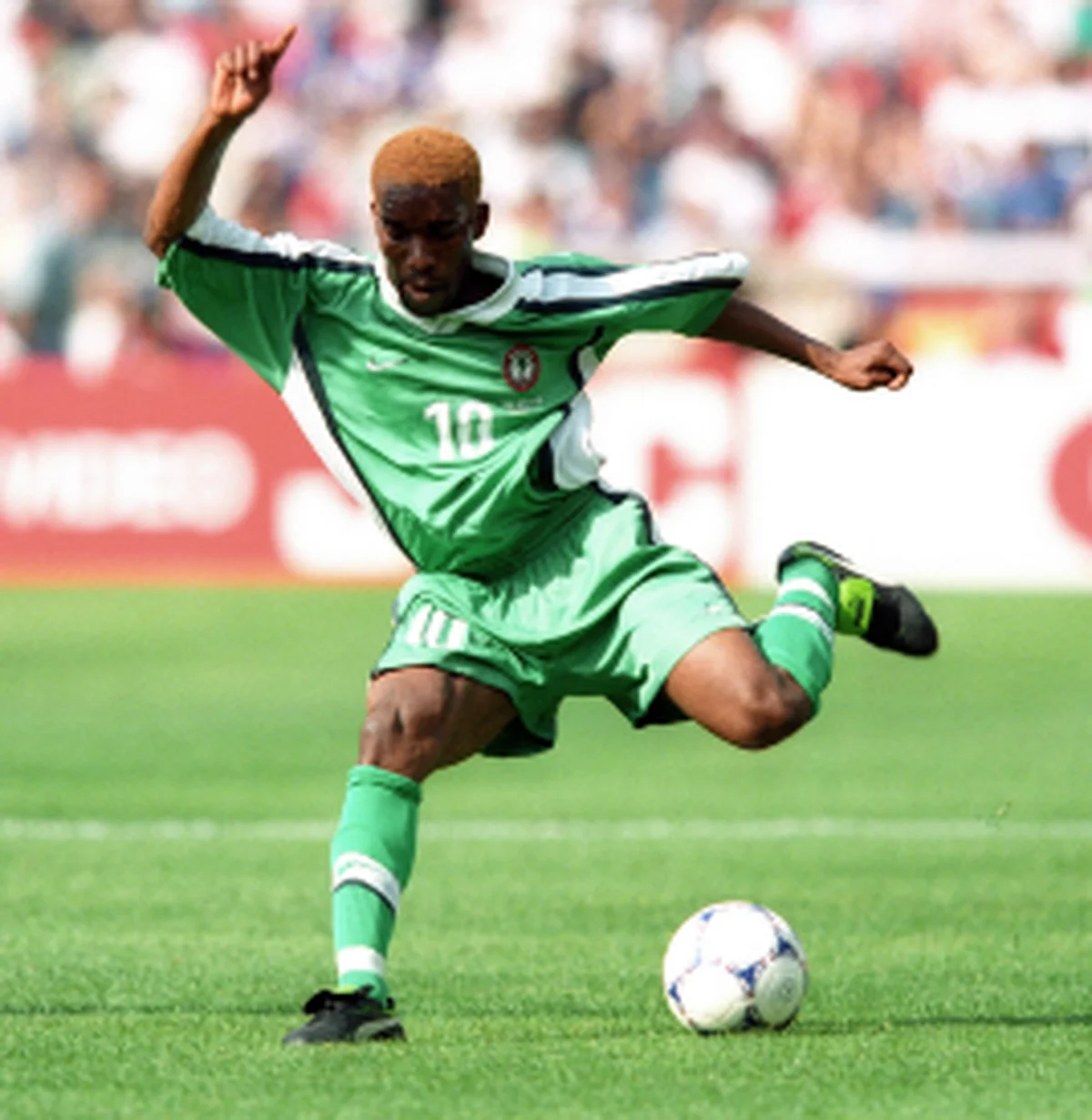
Nigeria did not just watch the Premier League from afar — Nigeria helped build it. Since the league's formation in 1992, over 60 Super Eagles players have graced Premier League pitches, more than any other African nation. That is a fact worth sitting with for a moment.
From Jay-Jay Okocha conjuring magic at Bolton's Reebok Stadium, to Nwankwo Kanu completing one of the most extraordinary hat-tricks in Premier League history, to the current generation of Super Eagles — Ola Aina, Alex Iwobi, Taiwo Awoniyi, Wilfred Ndidi — performing week in, week out across England's top flight, Nigeria's contribution to the world's most-watched football league has been constant and profound.
The Premier League is broadcast in 189 countries. Millions of Nigerians watch it every week. But there is nothing like seeing it live — inside the stadium, when the atmosphere hits you and a Super Eagles man is on the ball. This article is your guide to Nigeria's Premier League story — and how you can be inside the stadium for the next chapter.
Nwankwo Kanu — The Magician (Arsenal 1999–2004, West Brom 2004–2008)
If you ask any Arsenal fan of a certain era to name the single most astonishing Premier League moment they witnessed in person, many will say Stamford Bridge, October 23, 1999.
Chelsea led 2-0 at half-time. Kanu came on as a substitute and, in the space of 15 extraordinary minutes, scored three times — in the 75th, 83rd and 90th minute — to give Arsenal a 3-2 win. The commentary at the time was simple: "KAN U believe it?" No, many could not.
That goal was not an anomaly. Kanu made 198 Premier League appearances for Arsenal, scoring 44 goals, and was part of two title-winning squads — including the immortal 2003-04 Invincibles team that went the entire season unbeaten. He also won three FA Cups with the club. Before all of that, he had won the Champions League with Ajax (1994-95), Olympic gold with Nigeria in Atlanta (1996), and the Africa Cup of Nations (1994). He was named African Footballer of the Year twice.
What he brought to English football was something that could not be coached — an instinct for the impossible moment.
Jay-Jay Okocha — The Entertainer (Bolton Wanderers 2002–2006)
There are Premier League players, and then there is Jay-Jay Okocha. The Bolton Wanderers fans had a chant for him that said everything: "He's so good they named him twice."
Okocha arrived at Bolton from Paris Saint-Germain in 2002 under Sam Allardyce and immediately became one of the most talked-about players in the entire league — not because Bolton were a glamour club, but because of what he produced every time he touched the ball. The outrageous skills. The no-look passes. The free-kicks. A fan poll in 2008 voted one of his goals as Bolton's best-ever Premier League strike.
He made 124 Premier League appearances for Bolton, scored 14 goals, and captained the club to the 2004 League Cup final. In 2004, Pelé named him in his list of the 125 greatest living footballers. He won the BBC African Footballer of the Year award twice. He won Olympic gold with Nigeria in Atlanta. He won the 1994 AFCON. He is, by any measure, one of the greatest Nigerians ever to play in England.
John Obi Mikel — The Shield (Chelsea 2006–2017)
John Obi Mikel did not score many goals at Chelsea. That was never his job. His job was to protect the players around him, break up opposition attacks before they began, and give his teammates the platform to express themselves. He did it better than almost anyone in the Premier League during his era.
José Mourinho, not a man known for throwing praise around, called him his "miracle man." Mikel could operate as a destroyer, a box-to-box midfielder, or even in a number 10 role depending on what the team needed. In 249 Premier League appearances for Chelsea, he won 11 trophies: two Premier League titles, four FA Cups, two League Cups, the UEFA Champions League (2012) and the UEFA Europa League (2013).
He captained Nigeria to their third Africa Cup of Nations title in South Africa in 2013 and won an Olympic bronze medal at the 2016 Rio Games. His Chelsea career was one of the most decorated by any Nigerian player in Premier League history.
Yakubu Aiyegbeni — The Yak (Portsmouth, Middlesbrough, Everton, Blackburn 2003–2012)
Nigeria's all-time leading Premier League scorer. That record deserves to be stated plainly: Yakubu Aiyegbeni scored 96 Premier League goals across spells at Portsmouth, Middlesbrough, Everton and Blackburn Rovers — the fourth-highest total ever by an African player in the competition's history.
The goal that changed his career came in 2004, when he scored four times for Portsmouth in a single Premier League match against Middlesbrough. That performance convinced Middlesbrough to sign him. He went on to score 19 goals in 35 appearances during his first season there. He is one of only two Africans — alongside Didier Drogba — to score 100 goals in English football across all competitions.
He represented Nigeria at four Africa Cup of Nations tournaments and at the 2010 FIFA World Cup in South Africa. The Yak is, by goals alone, Nigeria's greatest Premier League player.
Efan Ekoku — The First (Norwich City 1993–1994, Wimbledon 1994–1998)
Every record has a starting point. On September 25, 1993, Efan Ekoku became the first African player in history to score a Premier League hat-trick, going one better by scoring four goals in Norwich City's 5-1 demolition of Everton at Goodison Park.
Earlier that same month, he had scored Norwich's first-ever goal in European competition, against Vitesse Arnhem in the UEFA Cup. He represented Nigeria at the 1994 World Cup. What Ekoku did in those months set the template for every Nigerian player who followed him into the Premier League. He was the trailblazer.
The Moments That Made the Super Eagles
To understand why Nigerian players carry themselves the way they do on a Premier League pitch, you need to understand where they come from.
At the 1994 Africa Cup of Nations in Tunisia, Nigeria were crowned champions of Africa. Rashidi Yekini finished as the tournament's top scorer with five goals and was named best player. The squad that beat Zambia 2-1 in the final included Yekini, Okocha, Kanu, Finidi George and Emmanuel Amunike.
That same summer, Nigeria made their first-ever FIFA World Cup appearance in the United States. They beat Bulgaria 3-0 in their opening group game — Yekini scoring the country's first-ever World Cup goal, his emotional celebration of grabbing the net still one of the most iconic images in World Cup history. They beat Greece 2-0 before losing to Argentina. In the round of 16, they led Italy 1-0 with two minutes remaining before Roberto Baggio rescued the Italians in the 88th minute and then scored a decisive extra-time penalty. Nigeria left the tournament ranked fifth in the world — still their highest-ever FIFA ranking.
Two years later, at the 1996 Atlanta Olympics, the team that would become known as the Dream Team produced what many still consider the greatest performance in African football history. They beat Brazil 4-3 in a semi-final that has never been forgotten, then beat Argentina 3-2 in the final, with Emmanuel Amunike scoring the winner. Nigeria became the first African nation to win Olympic football gold. Jay-Jay Okocha, reflecting on the gold medal later, put it simply: "Politically, we were in a mess, but football gave the people hope."
In 2013, Stephen Keshi led Nigeria to a third AFCON title in South Africa, becoming only the second person in history to win the tournament both as a player and as a coach. Captain John Obi Mikel lifted the trophy after a 1-0 win over Burkina Faso in the final.
The Current Generation: Super Eagles in the 2025-26 Premier League
The torch has been passed. And it is burning brightly.
Alex Iwobi — nephew of Jay-Jay Okocha, a fact that never gets old — is having one of the best seasons of his career at Fulham. After more than 100 Premier League appearances for Arsenal and a spell at Everton, the midfielder has matured into one of the most creative players in the division, finishing last season with nine goals, six assists, and the highest chances-created tally of any African player in the Premier League.
Ola Aina has established himself as one of the most consistent full-backs at Nottingham Forest. A Chelsea academy product who took the long road through loan spells and Serie A before finding his home in the Premier League, Aina was the first defender in the division to reach 100 Fantasy Premier League points last season — recognition of what those who watch him closely already knew.
Taiwo Awoniyi arrived at Forest after years of patience. Signed by Liverpool as an 18-year-old in 2015, he spent years on loan across Europe before finally getting his Premier League chance. He has made it count — he made history as the first Forest striker since 1995 to score in six consecutive Premier League matches. His direct style and physical presence draw comparisons to the great Rashidi Yekini.
Wilfred Ndidi, Super Eagles captain, has been a cornerstone of Leicester City's midfield for nearly a decade. Over 150 Premier League appearances. An FA Cup winner in 2021. One of the most respected defensive midfielders in African football. The kind of player whose contribution is best understood by watching the space he controls and the attacks he extinguishes before they become dangerous.
Calvin Bassey at Fulham — commanding, versatile, capable of playing centre-back or left-back — and Frank Onyeka at Brentford, the box-to-box engine who has made over 70 Premier League appearances since 2021, complete a current crop of Nigerian talent in England's top flight that the Super Eagles fanbase has every reason to follow closely.
All of these players are performing live, in stadiums around England, every single weekend.
Why Being There Is Different
The Premier League reaches 189 countries via television. But the broadcast camera cannot give you the vibration of a full house when an Awoniyi header hits the net. It cannot give you the noise when Aina attacks down the right at the City Ground and the Forest faithful rise. It cannot give you the scale of the Emirates when Iwobi picks up the ball in a tight midfield pocket and drives forward.
When Okocha nutmegged a defender at the Reebok, 25,000 fans went from silence to eruption in less than a second. When Kanu completed his hat-trick at Stamford Bridge, the away end was shaking. That kind of moment — that compression of noise and disbelief and pure football joy — exists only inside the stadium.
Nigeria has given the Premier League 60 players and 30 years of unforgettable moments. If you are visiting England, living in the UK, or planning a trip specifically to watch football — this is the season to do it. Whether you support Arsenal, Nottingham Forest, Fulham, Leicester or Brentford, Nigerian stars are on the pitch. Click here to see all upcoming Premier League fixtures and book your place inside the story.
The Next Chapter Is Being Written Now
From Efan Ekoku's four-goal performance at Goodison Park in September 1993 to Alex Iwobi's creativity at Craven Cottage in 2025, Nigeria's relationship with the Premier League has never been stronger or more visible.
The legacy of Kanu, Okocha, Mikel and Yakubu belongs to every Nigerian football fan. What the current generation is doing at their clubs belongs to them too — another set of Super Eagles competing at the highest level of club football in the world, every week.
The next Kanu or Okocha is already somewhere on the path. The next defining Nigerian Premier League moment is coming.
If you have the chance to be inside a Premier League ground when it happens — do not miss it. See Aina, Iwobi, Ndidi, Awoniyi and Onyeka in the flesh. Feel what it means for a Nigerian footballer to walk out onto a Premier League pitch. Click here for Premier League tickets across all 20 clubs.
ifeanyi Emmanuel
Discussions (0)