

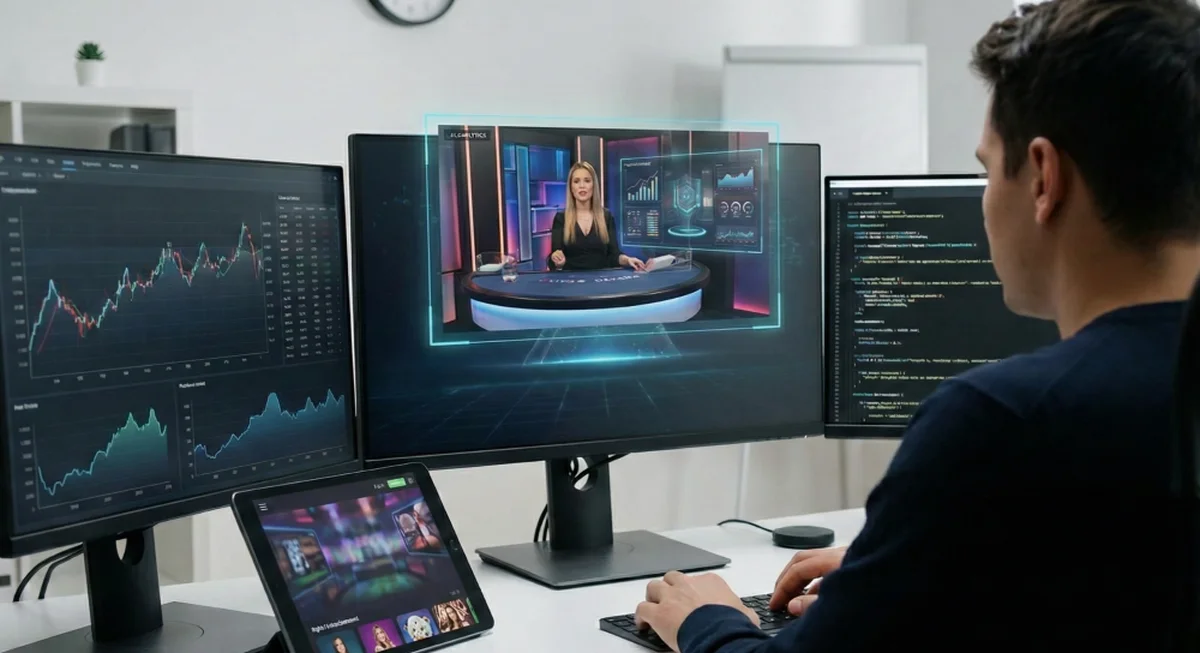
The Digital Transformation of the iGaming Landscape
The landscape of digital entertainment has undergone a radical transformation over the last decade. As we move further into the mid-2020s, the convergence of high-speed internet, artificial intelligence, and mobile accessibility has reshaped how users interact with online platforms. Nowhere is this technological shift more evident than in the iGaming sector.
For an audience accustomed to the fast-paced nature of sports and the statistical depth of match analysis, understanding the mechanics behind modern gaming platforms offers a fascinating look into software engineering and behavioral psychology. The industry has moved beyond simple digitization of traditional games; it is now a testbed for immersive technologies and complex algorithmic designs.
The Shift in User Experience and Interface Design
In the early days of the industry, platforms were often cluttered, desktop-centric, and utilitarian. By 2026, the paradigm has shifted entirely toward "frictionless" user experiences (UX). Modern interface design prioritizes minimalism and speed, acknowledging that the vast majority of users now access content via mobile devices.
This shift is not merely aesthetic. It involves the implementation of Progressive Web Apps (PWAs) that allow browser-based platforms to function with the smoothness of native applications, without the heavy storage requirements. For markets with varying data speeds, this optimization is crucial.
Furthermore, navigation has become algorithmic. Much like streaming services aimed at sports fans recommend matches based on viewing history, modern gaming platforms utilize machine learning to curate lobbies. When industry analysts evaluate new online casinos 2026, they often cite this personalized, AI-driven dashboard as a defining feature of the current generation, distinguishing modern platforms from the static directories of the past.
Live Dealer Technology and Immersive Streaming
Perhaps the most significant crossover for sports fans is the rise of the "Live Casino" sector. This vertical mirrors the excitement of live sports broadcasting, utilizing similar technology to bridge the gap between physical and digital environments.
The standard for 2026 involves 4K multi-angle streaming with ultra-low latency. The technology has evolved to include Optical Character Recognition (OCR), which instantly translates physical actions (like the dealing of a card or the spin of a wheel) into digital data. This ensures that the Game UI updates in milliseconds, keeping the gameplay seamless.
The "Game Show" Phenomenon
Beyond traditional formats, the industry has seen an explosion in "Game Show" mechanics. These hybrid games combine elements of RNG (Random Number Generation) with live hosting. They often utilize augmented reality (AR) to project 3D elements into a physical studio. For the player, this shifts the experience from a solitary activity to a communal, interactive event, often featuring live chat functions that create a social atmosphere similar to a sports forum or commentary feed.
Understanding Game Mechanics: RTP and Volatility
To truly understand the modern gaming landscape, one must look under the hood at the mathematical models that govern gameplay. Just as soccer relies on formation and tactics, gaming relies on RTP and Volatility.
Return to Player (RTP)
RTP is a theoretical statistical percentage that indicates the portion of wagered money a game is programmed to pay back to players over an extended period. For example, a game with 96% RTP is designed to retain 4% as the "house edge" over millions of rounds.
In 2026, there is a trend toward "Variable RTP" structures. Software providers now allow operators to select from different RTP settings for the same game depending on the market and regulatory costs. This transparency is vital for players who approach gaming analytically, as it directly impacts the theoretical value of the session.
Volatility and Variance
Volatility refers to the risk-reward ratio of a specific game.
- High Volatility: Characterized by less frequent payouts but a higher potential for significant returns. These mechanics appeal to users who prefer a high-risk strategy.
- Low Volatility: Offers frequent, smaller returns, extending gameplay duration but limiting the ceiling of the outcome.
The trend in 2026 is toward "Extreme Volatility" mechanics, particularly in slot games. This is driven by the popularity of "streaming" culture, where content creators showcase high-stakes sessions. However, balanced math models remain the standard for general audiences.
Algorithmic Innovations: Megaways and Crash Games
The actual engines driving these games have also evolved. Two specific mechanics illustrate the diversity of the 2026 market.
Megaways and Dynamic Reels
Originally developed by Big Time Gaming, the Megaways mechanic revolutionized slot architecture by removing fixed "paylines." Instead, the number of symbols on each reel changes with every spin, resulting in a fluctuating number of ways to win—often exceeding 100,000. This dynamic structure keeps the gameplay unpredictable, requiring the software to perform complex calculations instantly.
The Rise of "Crash" Mechanics
"Crash" games represent a departure from traditional casino aesthetics, appealing heavily to the cryptocurrency and tech-savvy demographic. The concept is simple: a multiplier increases from 1x upwards, and the player must "cash out" before the curve crashes.
This mechanic is pure risk management. It strips away the graphics of slots or cards and presents the player with a raw probability curve. It is fast, mobile-friendly, and often incorporates "Provably Fair" technology.
Blockchain and "Provably Fair" Gaming
Trust and transparency remain the cornerstones of the digital exchange of value. In 2026, blockchain technology has moved beyond just a payment method (using Bitcoin or USDT) and is now integral to game integrity.
"Provably Fair" is an algorithmic system that allows the player to verify the fairness of a game result. Before a round begins, the server generates a "seed" (a random string of data) and hashes it. The player also contributes a client-side seed. The result of the game is generated using these two inputs.
Because the server seed is hashed before the round starts, the operator cannot change the outcome after the bet is placed. After the round, the player can un-hash the data to verify the result. This level of transparency is becoming a standard expectation for new platforms entering the market, appealing to users who value data verification over blind trust.
Responsible Gaming via Artificial Intelligence
As the accessibility of gaming increases, so does the responsibility of operators to ensure player safety. The regulatory landscape in 2026 mandates the use of sophisticated AI monitoring tools.
These systems analyze player behavior in real-time to detect patterns indicative of problem gambling, such as:
- Chasing losses.
- Sudden increases in wager size.
- Extended session times without breaks.
When these flags are raised, automated systems can intervene by suggesting a "cooling-off" period or providing information on setting deposit limits. This proactive approach marks a significant maturation in the industry, moving away from reactive measures to preventative care.
Conclusion
The online gaming sector in 2026 is defined by a fusion of entertainment and high-end technology. It is an industry that has successfully adapted to the mobile-first world, integrating live streaming, complex mathematical models, and blockchain transparency to create a sophisticated product.
For the analytical observer, the interest lies not just in the games themselves, but in the infrastructure that supports them. From the latency of a live stream to the transparency of an algorithm, the metrics of quality are higher than ever. As technology continues to advance, the line between interactive entertainment, social streaming, and gaming will continue to blur, offering users increasingly immersive and secure experiences.
Discussions (0)