

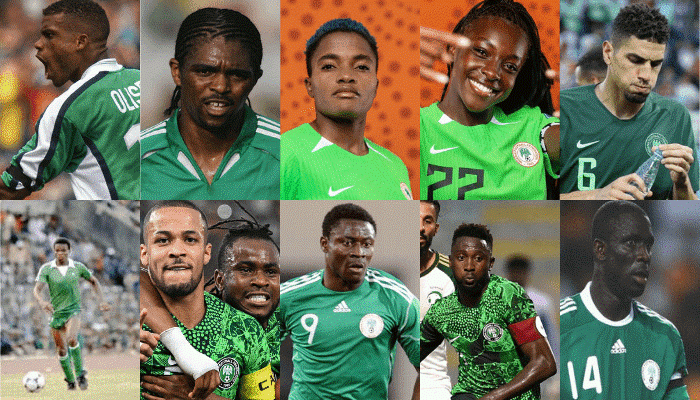
For decades, Nigerian football has been defined by raw talent, speed, and fearless creativity. But as the global game evolves, success is no longer measured by ability alone. Today, the true turning point for Nigerian football lies in how its players adapt—tactically, mentally, and culturally—when they step onto the world’s biggest stages. Every move abroad is more than a transfer; it is a test of readiness for modern football’s demands. The way Nigerian players respond to that challenge is quietly shaping the future of the nation’s game, influencing how talent is developed, perceived, and ultimately sustained for generations to come.
Tactical and Physical Adjustments
Stepping into a European league often feels like entering a different footballing language altogether. For many Nigerian players, raw athleticism and instinct—qualities honed on fast, uneven pitches back home—must now be paired with tactical discipline. Coaches demand precise positioning, structured pressing, and an understanding of space that leaves little room for improvisation. It’s no longer enough to beat a man; players are expected to read phases of play, anticipate transitions, and make decisions in seconds.
The physical adjustment is just as demanding. European football places heavy emphasis on conditioning, recovery, and repetition. Training sessions are longer, more analytical, and often tailored to microscopic details: sprint patterns, body angles, reaction timing. Nigerian footballers, known for strength and speed, quickly learn that endurance and consistency are equally vital. Matches come thick and fast, and the margin for error is thin. Even preparation off the pitch—nutrition, sleep, data tracking—becomes part of the job.
What helps many players through this transition is immersion in the modern football ecosystem. Studying opponents, reviewing performances, and following global football trends are now daily habits. Some players keep a close eye on matches and tactical shifts through mobile platforms and apps, just as fans do—tools like the 1xbet malaysia app are part of that wider digital environment where football is constantly analyzed, discussed, and rewatched. Adaptation, in the end, is about evolution: blending Nigerian flair with European structure, and proving that talent, when sharpened by discipline, can thrive anywhere.
Over time, this adjustment becomes less about survival and more about refinement. Nigerian footballers begin to recognize patterns in European matches—the timing of a full-back’s overlap, the moment a defensive line steps up, the spaces that open only for a second before closing again. Training drills are designed to repeat these scenarios endlessly, turning instinct into habit. The game slows down mentally, even as it accelerates physically. What once felt overwhelming becomes readable.
Physical development follows a similar curve. Strength is no longer used only for explosive moments but managed across ninety minutes. Players learn how to conserve energy, when to press aggressively, and when to hold position. Recovery sessions, gym work, and performance monitoring become as important as matchday itself. This professional environment rewards discipline, and those who adapt often extend their careers at the highest level.
Crucially, adaptation doesn’t erase identity—it sharpens it. Nigerian players who succeed in Europe don’t abandon their natural flair; they learn when to apply it. A well-timed dribble becomes more dangerous than constant risk-taking, and speed gains value when paired with intelligent movement. By blending physical power, tactical awareness, and modern preparation, these footballers redefine themselves. Their journey is not just about fitting into European football, but about influencing it—proving that adaptability is as much a talent as skill.
Mental Strength and Cultural Transition
Moving from Nigeria to Europe tests more than a footballer’s ability with the ball—it challenges the mind. The cultural transition can be as demanding as any tactical lesson on the training ground. New languages, unfamiliar routines, colder climates, and different social norms create a quiet pressure that isn’t always visible on matchday. For young Nigerian players, especially those leaving home for the first time, the early months can feel isolating, even when performances are solid.
Mental strength becomes the separator. European football is relentless in its scrutiny: training sessions are filmed, mistakes are replayed, and competition for places is constant. A single poor performance can lead to weeks on the bench, and resilience is required to respond without losing confidence. Players who succeed learn to detach emotion from criticism, to treat setbacks as information rather than judgment. This mental recalibration is often harder than adjusting to pace or tactics.
Staying connected to familiar rhythms helps ease that transition. Many players maintain a close link to football culture back home—following matches, analysis, and discussions through digital platforms in their downtime. Browsing global football spaces, checking updates, or even casually logging into environments like 1xbet malaysia login becomes part of how players stay grounded in the wider football world while adapting to a new one. It’s not about distraction; it’s about continuity.
In time, cultural adaptation becomes a strength rather than a burden. Players who navigate it successfully develop maturity, independence, and emotional control—qualities that translate directly onto the pitch. They learn to communicate across cultures, understand different coaching styles, and perform under pressure far from familiar support systems. For Nigerian footballers in Europe, mental strength isn’t just survival—it’s the foundation that allows talent to fully emerge on the global stage.

Technology, Media, and Staying Connected
For today’s Nigerian footballers playing in Europe, distance no longer means disconnection. Technology has quietly reshaped the way players experience life abroad, shrinking the gap between home and a new professional reality. A decade ago, moving overseas often meant cultural isolation; now, a phone screen keeps languages, voices, and football conversations within reach at all times. Staying connected has become part of modern professionalism.
Media plays a central role in this shift. Players follow Nigerian leagues, national team news, and familiar pundits alongside European coverage, building a broader understanding of the game they inhabit. Match highlights, tactical breakdowns, and fan reactions circulate instantly, allowing players to remain part of multiple football cultures at once. This constant flow of information doesn’t just satisfy curiosity—it reinforces identity. Knowing how performances are perceived back home can be motivating, grounding, and emotionally stabilizing.
Technology also supports adaptation on the pitch. Video analysis tools, performance apps, and data-driven feedback help players understand expectations faster and correct mistakes with precision. Communication with coaches, agents, and family happens seamlessly across time zones, reducing uncertainty and helping players focus on football. Even downtime becomes productive, with players reviewing matches, studying opponents, or simply staying mentally engaged with the sport beyond their own club environment.
In this connected world, Nigerian footballers are no longer navigating Europe alone. Technology and media act as invisible teammates, offering information, familiarity, and reassurance. They allow players to grow globally without losing their roots, blending ambition with belonging. In many ways, staying connected isn’t just a comfort—it’s a competitive advantage in the modern game.
What Adaptation Means for the Future of Nigerian Football
Every Nigerian footballer who successfully adapts to life in Europe changes the story of the game back home. Adaptation is not just a personal achievement; it is a signal to the entire football ecosystem that Nigerian talent can evolve, integrate, and compete at the highest levels of the sport. Each success abroad reshapes perceptions, opening doors that once seemed distant or closed.
For youth academies and grassroots coaches, these journeys become case studies. The focus begins to shift from producing players based solely on physical ability to developing footballers who understand structure, discipline, and professionalism. Young players grow up watching not just highlights, but full matches—learning how patience, positioning, and decision-making extend careers. Adaptation, in this sense, becomes a model, not an exception.
At the national level, the benefits are even clearer. Players returning for international duty bring with them tactical awareness, emotional maturity, and experience in high-pressure environments. This raises standards across the squad, influencing training culture and match preparation. The Super Eagles become stronger not only because of talent, but because of collective understanding shaped by global exposure.
Looking ahead, adaptation may be Nigeria’s greatest competitive advantage. As more players learn to blend local flair with global structure, Nigerian football gains depth, credibility, and sustainability. The future will not be defined by isolated stars, but by a generation shaped by adaptability—footballers who carry Nigerian identity onto the world stage while helping the game at home grow smarter, stronger, and more connected than ever before.
Discussions (0)